
Colorado Handyman Insurance
9:00am - 5:00pm Mon-Fri
We'll Reply in 15min*
Running a handyman business in Colorado means dealing with unpredictable job sites, expensive tools, and customers who expect professional accountability. A single accident, whether it's a burst pipe during a faucet replacement or a ladder falling through a client's window, can cost thousands out of pocket if you're uninsured. Colorado handyman insurance isn't just a nice-to-have; it's the financial backbone that keeps your operation running when things go sideways. The state's regulatory environment creates a unique situation for handymen, sitting somewhere between licensed contractors and casual laborers, and that gray area makes proper insurance coverage even more critical. Whether you're a solo operator picking up weekend jobs or managing a small crew across the Front Range, understanding what coverage you need, what it costs, and how to get it can save you from a business-ending claim. Colorado's mix of mountain communities, suburban sprawl, and urban centers means your risk profile can shift dramatically depending on where and how you work. This guide breaks down the specifics so you can make smart decisions about protecting your livelihood.
Understanding Handyman Insurance Requirements in Colorado
Colorado doesn't have a single statewide handyman license, which leads many operators to assume they don't need insurance either. That assumption is wrong, and it's expensive when tested. While the state's licensing framework is relatively relaxed for small-scope work, insurance requirements come from multiple directions: municipal codes, client contracts, and basic financial self-preservation.
The distinction between a handyman and a licensed contractor in Colorado typically hinges on project value. Jobs under a certain dollar threshold often don't require a contractor's license, but that doesn't exempt you from liability. If you damage a client's property or someone gets hurt on a job site, you're personally responsible unless you carry the right coverage.
State vs. Local Licensing Regulations
Colorado operates on a patchwork system. The state itself doesn't issue a general handyman license, but individual cities and counties often have their own rules. Denver, for example, requires permits for electrical and plumbing work regardless of project size. Boulder has its own set of contractor registration requirements. Colorado Springs takes a different approach entirely.
This means your insurance needs can vary based on your service area. A handyman working across multiple jurisdictions should check local requirements in each one. Some municipalities require proof of insurance before issuing any kind of work permit, even for minor repairs. Ignoring these local rules doesn't just risk fines; it can void your insurance coverage if a claim arises from unpermitted work.
The Role of General Liability Insurance
General liability (GL) is the foundation of any handyman insurance package. It covers third-party bodily injury and property damage, the two most common claim types in handyman work. Think of it this way: if you accidentally drill into a water line and flood a client's basement, GL pays for the damage. If a homeowner trips over your toolbox and breaks a wrist, GL covers that too.
Most Colorado handymen carry between $500,000 and $2 million in general liability coverage. The higher end is increasingly standard because many
property managers and commercial clients won't hire you without at least $1 million in coverage. GL also typically includes completed operations coverage, which protects you if something you installed or repaired fails after you've left the job site. That's a detail many new handymen overlook until a callback turns into a claim.

By: John Jacquat
Founder & President
Essential Coverage Types for Colorado Handymen
General liability is just the starting point. A complete insurance package for a Colorado handyman includes several additional policies, each addressing a specific risk that GL doesn't cover. Skipping any of these creates gaps that can drain your bank account fast.
| Coverage Type | What It Protects | Typical Annual Cost |
|---|---|---|
| General Liability | Third-party injury, property damage | $500 - $1,800 |
| Workers' Compensation | Employee injuries on the job | $800 - $3,000+ |
| Tools & Equipment | Theft, damage to your tools | $100 - $500 |
| Commercial Auto | Work vehicle accidents | $1,200 - $3,500 |
| Professional Liability | Faulty workmanship claims | $400 - $1,200 |
Workers' Compensation Laws in the Centennial State
If you have employees, Colorado law requires workers' compensation insurance. No exceptions, no minimum employee count threshold. Even one part-time helper triggers the requirement. Sole proprietors can exempt themselves, but subcontractors working for you may still need coverage under your policy if they don't carry their own.
Here's some good news for 2026: Colorado workers' comp premiums saw a 6.9% decrease in average loss costs starting January 1, 2026, marking continued relief for small businesses. That reduction reflects improved workplace safety data across the state and translates to real savings on your annual premium.
The penalty for not carrying workers' comp when required is severe. Colorado can fine uninsured employers up to $500 per day and hold business owners personally liable for all medical costs and lost wages from a workplace injury.
Tools and Equipment Floaters
Your tools are your income. A standard business owner's policy or general liability plan usually won't cover stolen or damaged tools, especially if they're in your truck or at a job site. An inland marine policy, often called a tools and equipment floater, fills that gap.
These policies are surprisingly affordable, often running $100 to $500 per year depending on the total value of your equipment. You'll need to provide an inventory list with estimated replacement costs. Keep this list updated; if you buy a new miter saw or impact driver, add it to the policy. A claim for tools not listed on your floater will likely be denied.
Colorado's
property crime rates in metro areas like Denver and Aurora make this coverage particularly relevant. Truck break-ins targeting contractor vehicles are common enough that some insurers ask about your overnight parking situation before quoting a rate.
Commercial Auto Insurance for Work Vehicles
Your personal auto policy almost certainly excludes coverage for vehicles used in business operations. If you're driving a truck loaded with tools to a job site and cause an accident, your personal insurer can deny the claim. Commercial auto insurance covers this gap and typically includes higher liability limits appropriate for business use.
Colorado requires minimum auto liability coverage of $25,000 per person and $50,000 per accident for bodily injury. For a work vehicle, those minimums are dangerously low. Most handymen carry at least $100,000/$300,000 in commercial auto liability. If your truck also serves as a mobile workshop, make sure the policy covers the tools and materials inside it during transit.
Factors Influencing Insurance Costs in Colorado
Insurance premiums aren't random numbers. Insurers use specific data points to calculate your risk and set your rate. Understanding these factors gives you some control over what you pay.
Your claims history matters more than almost anything else. A clean record over three to five years can earn significant discounts. One or two claims, especially liability claims, can push your premiums up by 20% to 40% at renewal time. This is why carrying proper coverage from day one matters: an early uninsured incident that you pay out of pocket still shows up in industry databases.
Business Size and Annual Revenue
Insurers price general liability based partly on your annual revenue. A solo handyman earning $60,000 per year will pay less than a three-person crew billing $250,000. The logic is straightforward: more revenue usually means more jobs, more job sites, and more exposure to potential claims.
Your number of employees directly affects workers' comp premiums as well. Each employee adds payroll to the calculation, and Colorado uses
class codes tied to specific job types to determine the rate per $100 of payroll. Handyman work generally falls under carpentry or general maintenance codes, which carry moderate risk ratings.
Service Scope and Risk Exposure
A handyman who sticks to painting, minor drywall repairs, and furniture assembly pays less than one who does plumbing, electrical, or roofing work. Each service type carries its own risk profile, and insurers adjust accordingly.
Geographic factors play a role too. Working in mountain communities with difficult access, extreme weather, and remote locations can increase your premium compared to suburban Front Range work. Some insurers also consider whether you work in occupied homes versus vacant properties or commercial buildings, since each setting presents different liability scenarios.
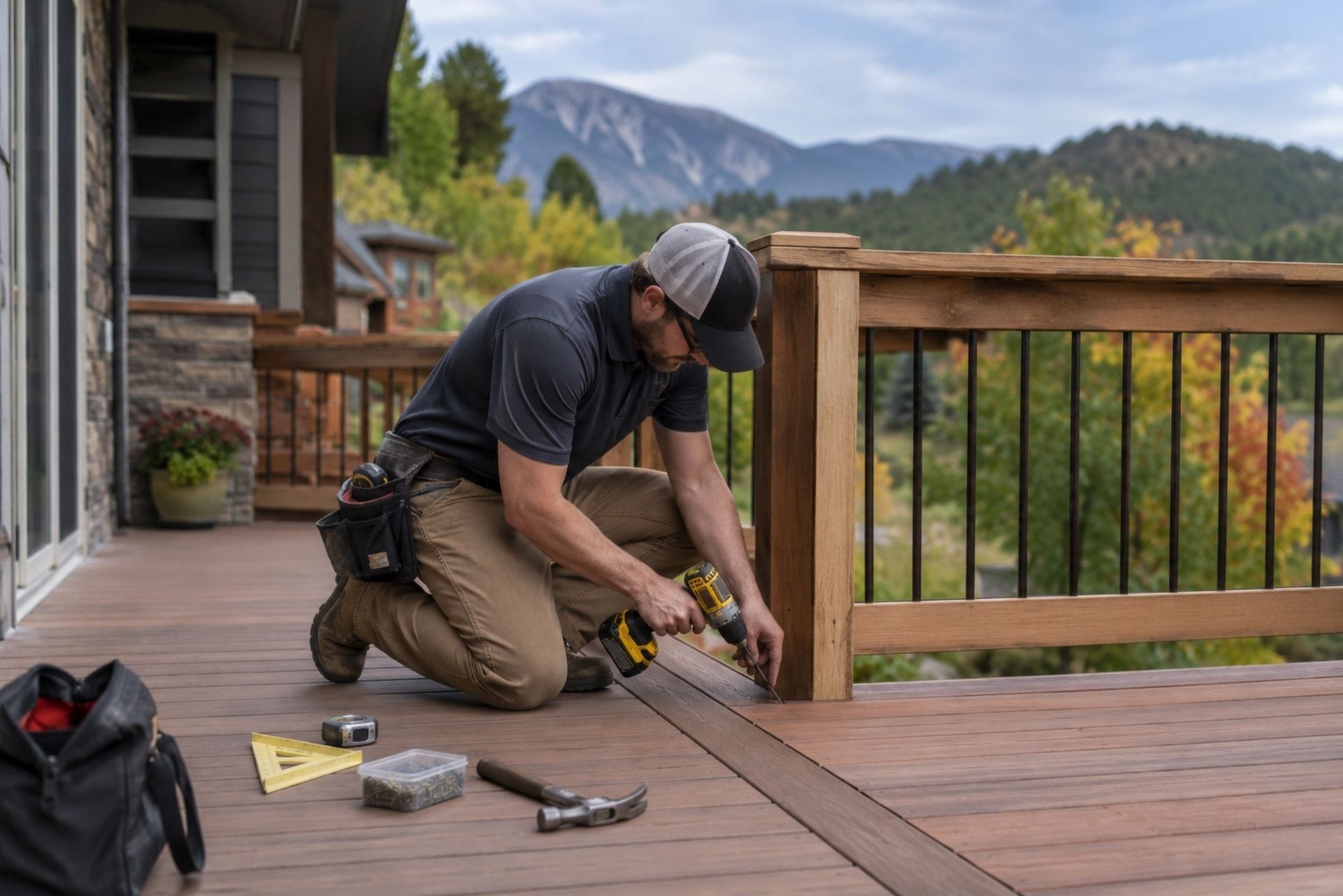
For a solo Colorado handyman with no employees, expect to pay roughly $1,200 to $3,000 per year for a basic package that includes general liability and a tools floater. Adding commercial auto bumps that to $2,500 to $5,500. Workers' comp for a small crew can add another $800 to $3,000 depending on payroll size and job classifications.
Monthly payment plans are available from most insurers, which helps with cash flow. A typical solo operator might budget $150 to $300 per month for comprehensive coverage. That's the cost of a few hours of billable work, and it protects everything you've built.
One budgeting tip that experienced handymen swear by: build insurance costs into your hourly rate. If your annual premium is $2,400 and you bill 1,200 hours per year, that's $2 per hour. Your clients are paying for professionalism and protection, and most understand that. The ones who don't aren't clients you want.
How to Obtain and Maintain Coverage
Getting insured isn't complicated, but doing it well requires some attention to detail. Rushing through the process or choosing the cheapest option without reading the policy can leave you exposed in exactly the situations you're trying to protect against.
Comparing Quotes from Local Providers
Get at least three quotes before committing. Colorado has a healthy market of insurance providers serving small contractors and handymen, including both national carriers and regional specialists. Regional insurers sometimes offer better rates for Colorado-specific risks because they understand the local market.
When comparing quotes, look beyond the premium. Check the deductible amounts, coverage limits, and exclusions. A policy that's $200 cheaper per year but carries a $5,000 deductible instead of $1,000 isn't actually saving you money if you file a claim. Ask each provider about bundling discounts; packaging GL, commercial auto, and a tools floater together often reduces the total cost by 10% to 15%.
Online quote tools have improved significantly, and many Colorado handymen
start their search through digital platforms that compare multiple carriers at once. Just verify that the final policy matches what was quoted, since online estimates sometimes exclude endorsements or riders you actually need.
The Importance of Certificates of Insurance (COI)
A Certificate of Insurance is a one-page document proving you carry active coverage. You'll need COIs constantly: property managers request them, general contractors require them before letting you on site, and some HOAs won't allow work without one.
Your insurer can issue COIs quickly, often within 24 hours. Keep a digital copy on your phone for impromptu requests. Some clients will ask to be listed as an "additional insured" on your policy, which extends certain protections to them. This is standard practice and usually costs nothing or a small fee. Don't push back on these requests; they signal that you're working with professional clients who value proper risk management.
FAQ
Do I need insurance if I'm a solo handyman with no employees? You're not legally required to carry general liability in Colorado, but you're personally liable for any damage or injury on a job site without it. Most solo operators consider it essential, not optional.
How much does handyman insurance cost per month in Colorado? A basic general liability policy runs roughly $40 to $150 per month for a solo operator. Adding commercial auto and tools coverage brings the total to $150 to $450 monthly, depending on your revenue and services.
Can I use my personal auto insurance for my work truck? No. Personal auto policies typically exclude business use. If you're hauling tools to job sites, you need a commercial auto policy or a business use endorsement at minimum.
Does my insurance cover subcontractors I hire? Usually not. Subcontractors should carry their own insurance. If they don't, your workers' comp policy may be required to cover them, which increases your premium.
What happens if I work without insurance and something goes wrong? You're personally liable for all damages, medical bills, and legal fees. A single serious claim can cost $50,000 or more, which is enough to bankrupt most small operations.
Making the Right Choice for Your Business
Handyman insurance in Colorado isn't a one-size-fits-all product. Your coverage should reflect the specific work you do, the areas you serve, and the size of your operation. Start with general liability as your foundation, add workers' comp if you have any employees, and layer on commercial auto and tools coverage based on your actual risk exposure.
The cost of being properly insured is predictable and manageable. The cost of being uninsured is neither. Build your premiums into your rates, shop multiple providers annually, and keep your COIs current. These habits separate professional handymen from hobbyists, and they're often the reason you get the call over your competitor. Protect your business now so it's still standing when the next opportunity comes through the door.
ABOUT THE AUTHOR:
John Jacquat
As President of Pure Risk Advisors, I’m dedicated to helping clients protect what matters most through clear, personalized insurance solutions. Since 2009, my focus has been delivering trusted coverage and guidance for individuals and businesses across Colorado and beyond.
The Pure Risk Process
Process of Working With A Business Insurance Agent in Colorado

Risk Analysis & Tailoring
Embark on a meticulous exploration of your business's unique vulnerabilities and aspirations. Pure Risk Advisors goes beyond mere coverage, ensuring you're equipped with solutions finely tuned to Colorado’s distinct business landscape.

Strategic Business Consultation
Dive deep into a strategic session with our seasoned specialists. By delving into your business model, aspirations, and challenges, we align our insurance recommendations not just to protect but to propel your business forward, keeping in mind Colorado’s intricate regulatory environment.

Swift Policy Integration
Upon discerning the optimal protection strategy, we streamline the activation process. Partnering with Pure Risk Advisors means more than just business insurance – it's about securing your enterprise's future with unmatched diligence and expertise in Colorado.
Pure Risk Advisors Team
Meet Our Colorado Professional Team Members
Meet the heart and soul of Pure Risk Advisors: our exceptional team. Each individual has been meticulously selected not just for their deep-rooted industry knowledge, but for their passion and commitment to genuinely serve our clients.
We pride ourselves on forging more than just business transactions; we build relationships. Our team doesn't see you as just another policy number. Instead, they view every interaction as a partnership, crafting solutions that resonate with your unique needs.
Dive in, get to know us, and discover firsthand why our team makes all the difference.




Client Testimonials
Amazing Feedback About Pure Risk Advisors


In today’s insurance marketplace, innovation and originality are important - but unless they’re accompanied by integrity and personalized service, they do little to accomplish a club owner’s goals. ACE National is proud to recognize John Jacquat and his company, Pure Risk Solutions, as one of our top-ranked premier industry providers. John has consistently mastered achievement in leadership, creating the best product for a client’s needs and following through on his word. I can recommend Mr. Jacquat without reserve if you’re in the market for club insurance.
Angelina Spencer
Executive Director of Ace National
Business Insurance Coverage in Colorado
Commercial Insurance Options
Business Owner's Policy
Coverage for property damage, liability, and business interruption combined.
General Liability Insurance
Protects against business liabilities like bodily injury and property damage.
Workers' Comp. Insurance
Covers employee injury costs, ensuring business and worker protection.
Professional Liability Insurance
Guard against professional mistakes, negligence, or services rendered failures.
Commercial Property Insurance
Broad protection against business-related injuries or property damage claims.
Commercial Auto Insurance
Coverage for business vehicles against damage, injury, or liability.
We've been serving Colorado Business Since 2009
Industries Served
Latest News & Blog
Read Our Latest Articles