Boulder Condo Association Insurance
9:00am - 5:00pm Mon-Fri
We'll Reply in 15min*
Boulder condo associations face a unique set of insurance challenges that most communities along the Front Range don't share. Between
wildfire exposure along the foothills, rising construction costs, and an increasingly expensive insurance market, getting the right coverage requires more than a quick quote comparison. Colorado is now
the sixth-costliest state for insurance, with average annual premiums reaching $4,072 in 2024, and those numbers have only climbed since. If you're serving on a condo board or managing a community association in Boulder, understanding the interplay between wildfire risk, building valuation, liability, D&O, crime coverage, and deductibles isn't optional. It's your fiduciary duty. This guide breaks down each of those components so you can make informed decisions rather than expensive mistakes.
Boulder sits in a zone where urban density meets wildland fire risk, and that geographic reality shapes every insurance decision your association will face. Carriers have pulled out of high-risk Colorado markets in recent years, leaving many associations scrambling for coverage or paying steep premiums for policies with less protection than they had five years ago.
The Colorado Division of Real Estate has issued guidance on the FAIR Plan, which acts as an insurer of last resort for properties that can't find coverage in the standard market. If your association is near the wildland-urban interface, you should know this program exists before your renewal comes due and you're out of options.
What makes condo association insurance in Boulder different from a typical HOA policy elsewhere? Three things: wildfire exposure drives up property premiums, high construction costs inflate replacement values, and Colorado's CCIOA statute imposes specific insurance requirements on associations. Your governing documents likely require certain coverage types, but the statute sets a floor. Boards that treat insurance as a line item rather than a strategic decision often find themselves underinsured or overpaying, sometimes both at once.
We've seen associations save 15-20% simply by shopping with a broker who understands Colorado's condo market rather than using a generalist agent. That said, price shouldn't be the only factor. Coverage gaps discovered during a claim are far more expensive than a slightly higher premium.

By: John Jacquat
Founder & President
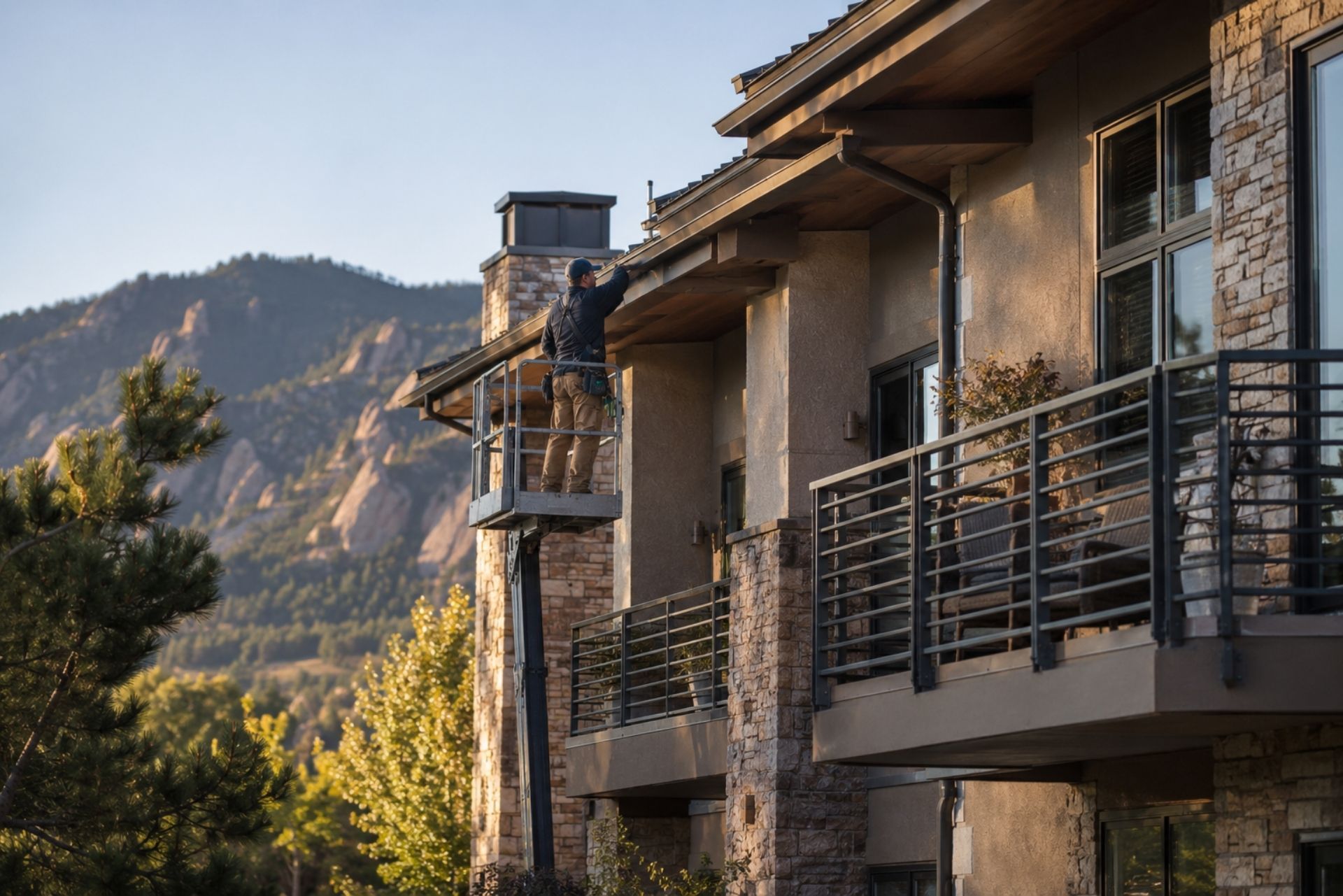
Protecting Assets from Wildfire and Property Risks
Wildfire is the headline risk for any Boulder property, but it's not the only property peril your association needs to address. Hail, wind, and water damage claims are common across Colorado, and your master policy needs to account for all of them. The master policy typically covers the building structure, common areas, and sometimes original fixtures, depending on whether your association uses an "all-in" or "bare walls" approach.
Your CC&Rs should specify which approach applies. If they don't, that ambiguity creates a coverage gap between the association's master policy and individual unit owners' HO-6 policies. Sorting this out before a loss event matters more than most boards realize.
Wildfire Mitigation and Community Rating Systems
Colorado's wildfire mitigation programs can directly reduce your insurance costs. Communities that participate in programs like Firewise USA or that complete community wildfire protection plans often qualify for wildfire mitigation discounts from insurers. These aren't token reductions. Some carriers offer 5-15% premium discounts for documented mitigation efforts.
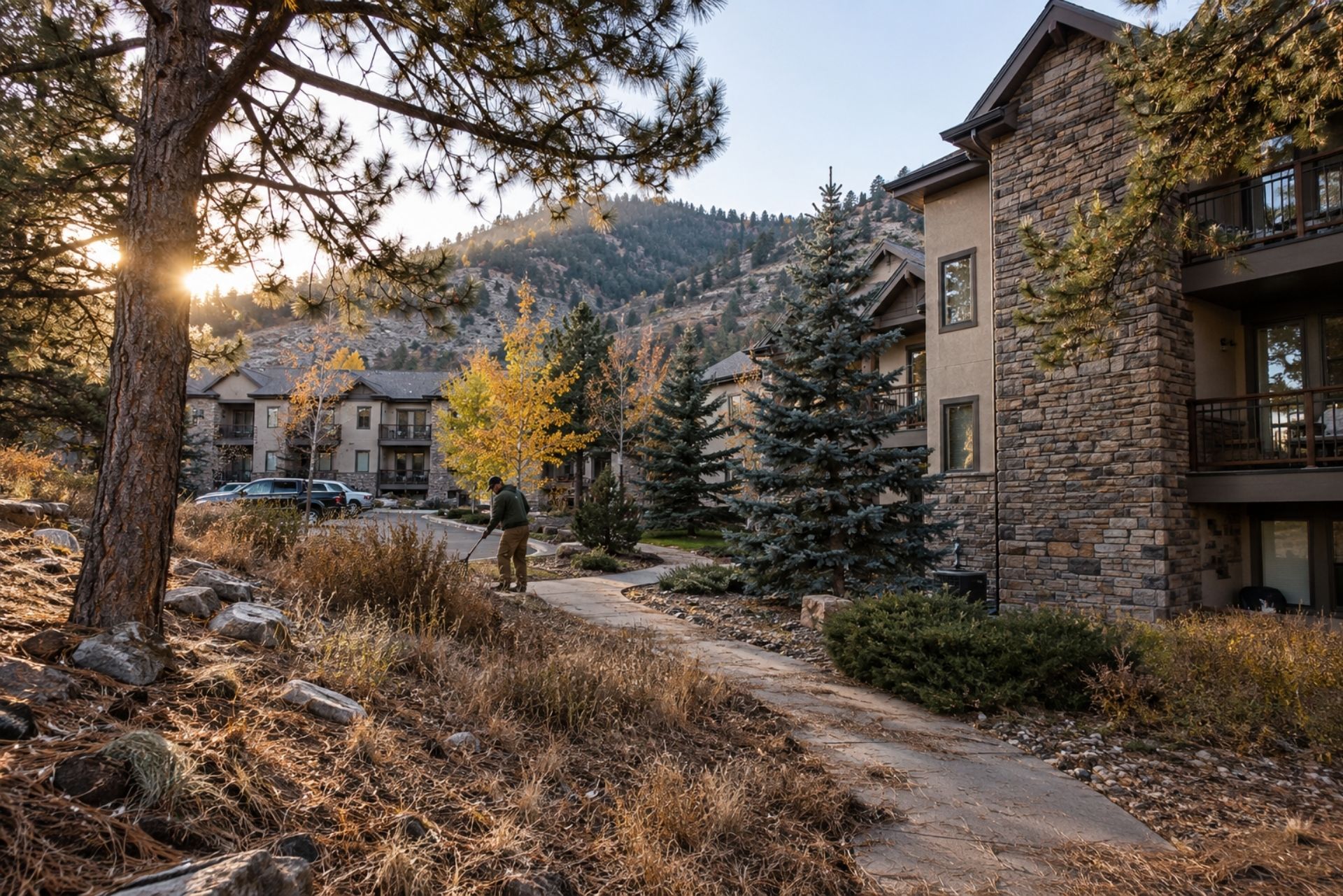
Practical steps include maintaining defensible space around buildings, using fire-resistant materials for exterior repairs, and keeping vegetation management on a regular schedule. Boulder County already enforces wildfire mitigation standards for properties in mapped hazard areas, so your association may be required to do some of this work regardless.
The key is documenting everything. Carriers want proof: photos, receipts, inspection reports. A well-organized mitigation file can be the difference between a competitive quote and a declination letter. If your community hasn't started this process, bring it to the next board meeting. It's one of the few things that simultaneously reduces risk and lowers cost.
Accurate Building Valuation in a High-Cost Market
Underinsurance is the most common mistake we see with Boulder condo associations. Construction costs in Boulder County have risen sharply, and custom builds in the area can exceed $500 per square foot depending on materials and design. Your master policy's building valuation needs to reflect replacement cost, not market value or the original purchase price.
A professional replacement cost appraisal should be updated every three to five years. Between appraisals, make sure your policy includes an inflation guard endorsement that automatically adjusts coverage limits. Without one, your coverage erodes every year as construction costs rise.
One trap boards fall into: assuming the insurance company's estimated replacement cost is accurate. Carriers use automated tools that may not account for Boulder's specific labor costs, elevation challenges, or local building codes. An independent appraisal gives you a defensible number and puts you in a stronger position if you ever need to file a total loss claim.
Core Liability Protections for Associations
Property coverage gets most of the attention, but liability exposure is where lawsuits happen. Your association faces liability risks every day: someone slips on an icy walkway, a child is injured at the pool, a contractor falls off a roof during maintenance work. General liability coverage is the foundation, but it's only one piece of the puzzle.
Most master policies bundle general liability with property coverage, but the limits matter. A $1 million per-occurrence limit might sound adequate until you realize a serious injury claim can exceed that amount. We typically recommend associations carry at least $2 million in general liability, with a commercial umbrella policy on top for catastrophic events.
General Liability vs. Directors & Officers (D&O)
These two coverages protect against very different risks, and both are essential. Here's how they compare:
| Feature | General Liability | Directors & Officers (D&O) |
|---|---|---|
| What it covers | Bodily injury, property damage to third parties | Wrongful acts by board members in their governance role |
| Typical claims | Slip-and-fall, pool injury, falling tree limb | Failure to maintain, breach of fiduciary duty, discrimination |
| Who's protected | The association as an entity | Individual board members and officers |
| Common exclusions | Intentional acts, contractual liability | Known prior acts, criminal conduct |
| Why it matters | Covers physical harm on common property | Protects volunteers from personal financial ruin |
D&O coverage is often overlooked because boards assume their general liability policy covers everything. It doesn't. If a unit owner sues the board for mismanaging reserves, failing to enforce rules fairly, or making a negligent decision about a vendor contract, that's a D&O claim. Without this coverage, individual board members could be personally liable.
Colorado law provides some protections for volunteer board members, but those protections have limits. D&O insurance fills the gap and makes it far easier to recruit competent board volunteers, something every association struggles with.
Crime and Fidelity Coverage for HOA Funds
Embezzlement from HOA accounts is more common than most people think. A property manager or board treasurer with access to association funds can cause significant financial damage before anyone notices. Crime and fidelity coverage protects your association's money from theft, fraud, and dishonest acts by employees, board members, or management company staff.
CCIOA requires associations to maintain fidelity insurance, and the coverage amount should equal at least the total of your operating account and reserve fund balances. If your reserves hold $500,000, your fidelity bond should cover at least that amount.
One detail boards often miss: make sure the policy covers your management company's employees, not just association volunteers. Most theft occurs at the management company level, where staff handle multiple associations' funds and have regular access to bank accounts. Ask your carrier specifically whether third-party management company employees are included.
Managing Deductibles and Financial Exposure
Deductibles are where the real financial planning happens. Your association's deductible structure determines how much you'll pay out of pocket before insurance kicks in, and for Boulder associations, this can be a substantial number.
Many property policies now carry percentage-based deductibles for wind and hail, meaning your out-of-pocket cost scales with your building's insured value. On a $10 million building, a 5% wind/hail deductible means $500,000 before the carrier pays a dime. That's a number your reserve fund needs to be prepared for.
Your board should also establish a clear deductible assessment policy. Colorado allows associations to assess unit owners for insurance deductibles, but the process and limits should be spelled out in your governing documents. Without a written policy, you'll face disputes after every claim about who pays what.
Comparison: Standard vs. Percentage-Based Deductibles
| Deductible Type | How It Works | Typical Range | Best For |
|---|---|---|---|
| Standard (flat dollar) | Fixed amount per claim | $5,000 - $25,000 | Fire, water, liability claims |
| Percentage-based | % of total insured value per claim | 1% - 5% of building value | Wind, hail, sometimes wildfire |
| Per-unit assessment | Deductible split among affected owners | Varies by CC&Rs | Communities with clear assessment policies |
The trend in Colorado is toward higher percentage-based deductibles, especially for wind and hail. Some carriers won't write a policy without them. Your reserve study should account for these deductible amounts as a potential expense, and your association should maintain a dedicated deductible fund or ensure reserves can absorb a hit.
Common Questions About Boulder Condo Insurance
Does every unit owner still need their own insurance if the association has a master policy? Yes. The master policy covers the building and common areas, but unit owners need an HO-6 policy for personal property, interior improvements, loss assessment coverage, and personal liability within their unit.
Can our association be denied wildfire coverage entirely? It can. Carriers have declined to renew policies in high-risk areas across Colorado. If you're denied, the Colorado FAIR Plan provides basic coverage as a last resort, though premiums are typically higher and coverage more limited.
How often should we update our building valuation? Every three to five years through a professional appraisal. Between appraisals, use an inflation guard endorsement to keep pace with rising construction costs.
What's the difference between a fidelity bond and crime insurance? They're closely related. A fidelity bond specifically covers dishonest acts by named individuals, while crime insurance can be broader, covering forgery, computer fraud, and funds transfer fraud. Many associations carry both.
Who decides how the deductible is paid after a claim? Your governing documents and any board-adopted deductible policy determine this. Some associations assess the affected unit owner; others spread the cost across all owners. Get this in writing before a claim happens.
Are volunteer board members personally liable for insurance decisions? They can be if they act negligently or outside their authority. D&O insurance protects against this, and Colorado's nonprofit protections offer some additional shield for good-faith decisions.
Making the Right Choice for Your Community
Getting condo association insurance right in Boulder requires attention to six interconnected areas: wildfire protection, accurate building valuation, general liability, D&O coverage, crime and fidelity bonds, and a deductible strategy your reserves can support. Neglecting any one of these creates exposure that could cost your community hundreds of thousands of dollars.
Start with a professional replacement cost appraisal if you haven't done one recently. Review your deductible structure against your reserve fund balance. Confirm that your D&O and crime coverage limits match your actual risk profile. And if your community is anywhere near the wildland-urban interface, invest in documented wildfire mitigation, both for safety and for the insurance savings it can generate.
The best time to review your association's coverage is before renewal, not after a claim. Work with a broker who specializes in Colorado community associations, and bring your board into the conversation early. Your unit owners are counting on you to protect their investment, and the right insurance program is how you deliver on that responsibility.
ABOUT THE AUTHOR:
John Jacquat
As President of Pure Risk Advisors, I’m dedicated to helping clients protect what matters most through clear, personalized insurance solutions. Since 2009, my focus has been delivering trusted coverage and guidance for individuals and businesses across Colorado and beyond.
The Pure Risk Process
Process of Working With A Business Insurance Agent in Colorado

Risk Analysis & Tailoring
Embark on a meticulous exploration of your business's unique vulnerabilities and aspirations. Pure Risk Advisors goes beyond mere coverage, ensuring you're equipped with solutions finely tuned to Colorado’s distinct business landscape.

Strategic Business Consultation
Dive deep into a strategic session with our seasoned specialists. By delving into your business model, aspirations, and challenges, we align our insurance recommendations not just to protect but to propel your business forward, keeping in mind Colorado’s intricate regulatory environment.

Swift Policy Integration
Upon discerning the optimal protection strategy, we streamline the activation process. Partnering with Pure Risk Advisors means more than just business insurance – it's about securing your enterprise's future with unmatched diligence and expertise in Colorado.
Pure Risk Advisors Team
Meet Our Colorado Professional Team Members
Meet the heart and soul of Pure Risk Advisors: our exceptional team. Each individual has been meticulously selected not just for their deep-rooted industry knowledge, but for their passion and commitment to genuinely serve our clients.
We pride ourselves on forging more than just business transactions; we build relationships. Our team doesn't see you as just another policy number. Instead, they view every interaction as a partnership, crafting solutions that resonate with your unique needs.
Dive in, get to know us, and discover firsthand why our team makes all the difference.




Client Testimonials
Amazing Feedback About Pure Risk Advisors


In today’s insurance marketplace, innovation and originality are important - but unless they’re accompanied by integrity and personalized service, they do little to accomplish a club owner’s goals. ACE National is proud to recognize John Jacquat and his company, Pure Risk Solutions, as one of our top-ranked premier industry providers. John has consistently mastered achievement in leadership, creating the best product for a client’s needs and following through on his word. I can recommend Mr. Jacquat without reserve if you’re in the market for club insurance.
Angelina Spencer
Executive Director of Ace National
Business Insurance Coverage in Colorado
Commercial Insurance Options
Business Owner's Policy
Coverage for property damage, liability, and business interruption combined.
General Liability Insurance
Protects against business liabilities like bodily injury and property damage.
Workers' Comp. Insurance
Covers employee injury costs, ensuring business and worker protection.
Professional Liability Insurance
Guard against professional mistakes, negligence, or services rendered failures.
Commercial Property Insurance
Broad protection against business-related injuries or property damage claims.
Commercial Auto Insurance
Coverage for business vehicles against damage, injury, or liability.
We've been serving Colorado Business Since 2009
Industries Served
Latest News & Blog
Read Our Latest Articles